What Counts as a "Single Item"? Sets and Collections in Probate Valuation
In brief
The £1,500 figure on form IHT407 is an individual-listing instruction for jewellery, not a universal threshold that makes professional valuation compulsory for every kind of possession. Sets and pairs should still be valued in the way the market would naturally sell them, while collections need a reasonable aggregate value and enough evidence to support the estate return.
The £1,500 Threshold in Context
HMRC's general guidance says: "You can also get a professional valuation for anything worth over £1,500." That is advice, not a universal legal requirement. On form IHT407, the clearest £1,500 instruction is for jewellery: each item valued at £1,500 or more is listed separately, and a professional valuation is attached if one has been obtained.
Other categories on IHT407 — including vehicles, antiques, works of art and collections — have their own fields and instructions. The practical valuation question remains important: what would a willing buyer regard as the natural asset for sale? A pair of matching candlesticks, a tea service or a coherent collection may have a different market value together than as disconnected pieces.
The Natural Unit Principle
The foundational rule comes from Duke of Buccleuch v IRC [1967], a House of Lords case that established how property must be valued for tax purposes. The principle is that an asset should be valued in the form a willing buyer would naturally acquire it — its "natural unit" of sale.
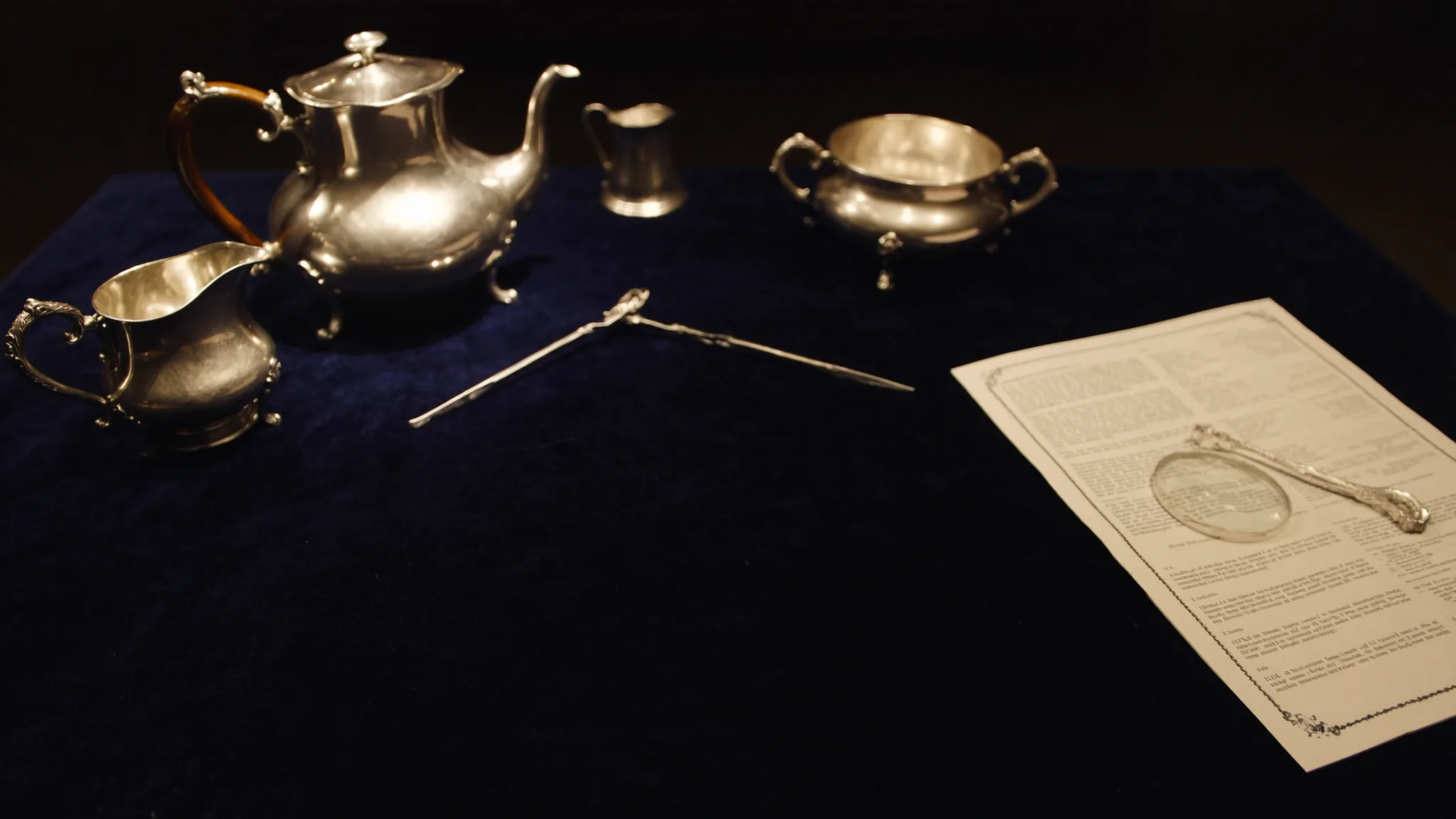
For chattels, this means matched sets, pairs, and suites are typically valued together rather than as their constituent pieces. A pair of antique candlesticks is more valuable as a pair than as two single candlesticks, because the market for matched pairs is stronger and the items lose value if separated. A complete six-piece tea service is worth more than the same pieces sold individually, because complete services are rare and command a premium.
In practice, a pair of items may be worth more together than the sum of two isolated pieces. The pair should therefore be valued on the market basis that best reflects how it would normally be offered for sale. This does not create an automatic professional-valuation requirement at £1,500, but the evidence should explain the unit being valued.
How Sets and Pairs Are Treated
The natural unit rule applies most clearly to objects designed and sold as sets or pairs. Common examples include:
- Pairs of candlesticks, vases, urns, mirrors, and chairs
- Silver tea services, coffee services, and dinner services
- Suites of furniture (a sofa with matching armchairs; a bedroom suite)
- Canteens of cutlery (silver, silver-plate, or designer steel)
- Sets of dining chairs (typically valued as a set of six, eight, or twelve)
- Matched pairs of paintings (pendant portraits, landscape pairs)
- Garniture sets (typically a clock with matching side ornaments)
How Collections Are Treated
Collections of similar items present a different question. A stamp collection, a wine cellar, a coin collection, a library of antiquarian books — each may contain hundreds or thousands of individual items, with most worth less than £1,500 but some specific items potentially worth far more.
A collection may need to be considered both as a whole and by reference to particularly valuable constituent pieces. A coherent collection can attract buyers prepared to pay a premium for the entirety, while one rare object can account for most of its value.
A wine cellar, for example, might contain hundreds of ordinary bottles and a small number of rare vintages. A useful inventory identifies those outliers and supports the aggregate figure with appropriate market evidence. The same approach helps with stamp, coin and book collections.
IHT407 has a separate collections section. Follow the current form and provide a reasonable total; where the aggregate or an individual item may be significant or hard to identify, a specialist report can provide useful supporting evidence.
IHT407 Reporting in Practice
Form IHT407 is the schedule executors use to report household and personal goods. It splits items into categories: jewellery, vehicles (including boats, caravans, and aircraft), antiques and works of art, collections, and "other" household goods.
The form requires each item of jewellery valued at £1,500 or more to be listed individually and asks for any professional valuation obtained to be attached. Vehicles are entered individually in their own section. Antiques, works of art, collections and other household goods are covered in separate sections, so their current instructions should be followed rather than importing the jewellery threshold into every category.
There is no single monetary threshold at which professional help becomes compulsory for every chattel. A proportionate approach is to seek specialist input where identity, authenticity, condition, rarity or the way a set or collection is sold makes a reasonable estimate difficult.
Edge Cases That Catch Executors Out
Several common situations cause confusion in practice. Knowing them in advance avoids costly mistakes.
- A pair of items where one is broken or lost. The remaining item is valued as a single piece, not automatically at half the pair value. The market evidence should reflect actual single-item sales and the effect of the missing companion.
- A set with one missing piece. A six-piece tea service missing the milk jug should be described and valued as an incomplete service. The effect depends on the category, buyer demand and how replaceable the missing piece is; it should not be assumed as a fixed percentage.
- Matched but not original pairs. Two candlesticks of the same design but different dates of manufacture are usually valued individually, not as a pair, because the market does not treat them as a true matched pair.
- Sets that have been broken up across beneficiaries before valuation. The set is valued at its date-of-death value — which means the executor must value it as a complete set even if it is going to be split. The split only happens after probate.
- High-value items hidden within mundane categories. A "box of old jewellery" worth £200 by weight may contain a single Edwardian diamond brooch worth £8,000. Items must be assessed item-by-item for the threshold, not by container.
- Costume jewellery and unhallmarked pieces. Designer costume jewellery can be valuable despite containing no precious metal. On IHT407, the individual-listing instruction for jewellery depends on value, not material composition.
When in Doubt, Get a Professional Assessment
A qualified probate valuer can often screen a household's personal goods in one visit, identify potentially valuable items, explain which sets should be treated as natural units, and flag collections needing specialist input.
The report gives the personal representative evidence for the IHT400 figures if HMRC asks questions. It does not guarantee acceptance, but it can help demonstrate that reasonable care was taken.
A properly incurred valuation fee can ordinarily be paid from estate funds as an administration cost. HMRC does not, however, allow the fee to be deducted when calculating Inheritance Tax.
Frequently Asked Questions
01Do I need to value matching items as a set or individually?
If the items were designed and sold as a set, pair, or suite, they are normally valued together as their natural unit. A pair of antique candlesticks is valued as a pair; a six-piece tea service is valued as a service; matched dining chairs are valued as a set. The set value is often higher than the sum of the individual pieces, because complete sets command a market premium.
02My father had a stamp collection. How is that treated for probate?
Start with an inventory and a reasonable aggregate Open Market Value for the collection. Rare individual stamps may need separate identification because they can drive the total, and a specialist philatelist's report can support both the aggregate and any outliers. Record the collection in the relevant IHT407 section and follow the current form instructions.
03What if I do not know whether a single item is worth £1,500?
Consider a professional opinion if the item may be valuable or is difficult to identify. The £1,500 figure is not a universal professional-valuation threshold, although IHT407 requires jewellery at or above that amount to be listed separately. A properly incurred fee can ordinarily be paid from estate funds, but it is not deductible in the Inheritance Tax calculation.
04Does the £1,500 threshold apply to vehicles?
Vehicles have their own section on IHT407 and are identified separately; do not apply the jewellery £1,500 instruction to them. The form covers cars, motorcycles, caravans, boats and aircraft. Use the current instructions for each category and retain evidence supporting the Open Market Value.